


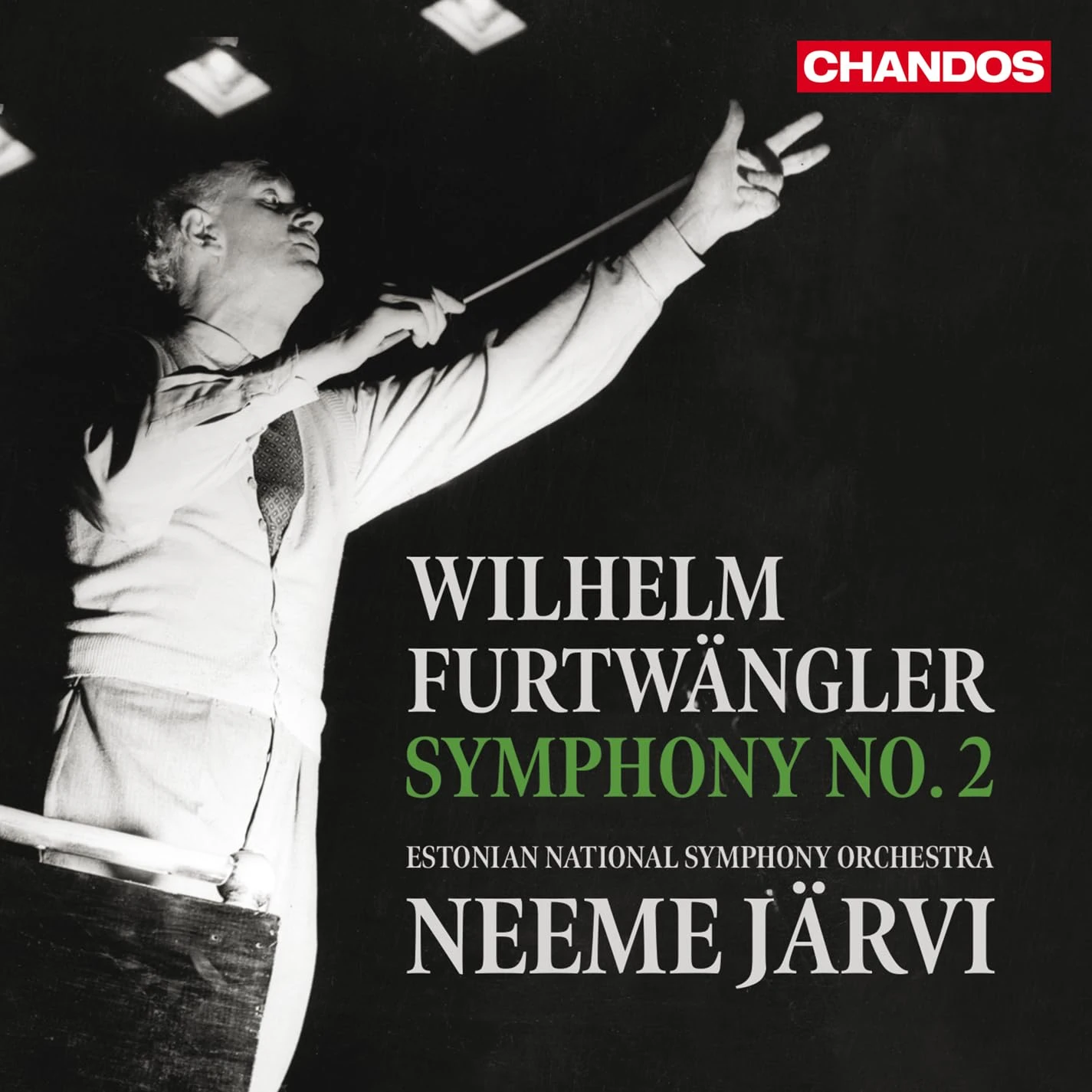
[CD] ESTONIAN NATIONAL SYMPHONY ORCHESTRA - FURTWANGLER: SYM NO. 2 IN E MINOR
Leave feedback on the product

Product code: 0095115237328
Opis
- W naszym sklepie znajdziesz tylko nowe płyty
- Kupując płytę, sprawdź poniżej spodziewaną datę jej premiery
- Sprawdź również sugerowaną datę wysyłki
- Preordery wysyłamy w ciągu 10 -15 dni roboczych od dnia premiery, z zastrzeżeniem, że data premiery może się zmienić, co jest od nas niezależne
- Jeśli wybrałeś/-łaś odbiór osobisty, poczekaj na maila z informacją, że płyta jest gotowa do odbioru
- Ten tytuł jest importowany z USA; czas wysyłki w związku z tym może być wydłużony
Estonian National Symphony Orchestra - FURTWANGLER: SYM NO. 2 IN E MINOR
Format: CD
Label: CHANDOS [0095115237328]
RELEASE DATE: June 20, 2025
Opis:
Wilhelm Furtwangler was born in Schoneberg (now a district of Berlin) in 1886, but spent most of his childhood in Munich, where his father, an archaeologist, taught at the university. He received a musical education from an early age, and soon became obsessed with the works of Beethoven - a lifelong fascination. Furtwangler considered himself to be a composer, and learned to conduct principally to be able to promote his own works. Everyone else saw him as an incredibly talented conductor, but as a composer? - not so much. It is, however, his own individual approach that underscores his entire career - his reputation as a conductor was built on the re-interpretation of each score he conducted, a principle far removed from the then more usual rigid adherence to performance tradition. His whole career was built on his belief in the sanctity of the German artistic tradition - not only of music but of literature and philosophy. Furtwangler rose to the most important conductorships available, replacing Richard Strauss at the Staatskapelle Berlin in 1920, and then, following the sudden death of Arthur Nikisch, the Leipzig Gewandhaus Orchestra and the Berlin Philharmonic. Through the 1930s and '40s, his career was defined by his opposition to Nazism, and the determination of the regime to use his international reputation as propaganda to promote their cause. The best known of his three symphonies, the second was composed in 1945 - 46 whilst he was self-exiled in Switzerland.
Tracklista:
- 1. Symphony No. 2 in E minor~1. Assai moderato (Ruhig beginnen) - Allmählich belebend (bis Allegro) - Von hier ab festes Tempo (Allegro) - (Molto allegro) - Tempo des Anfangs - Allmählich breiter werden - Immer langsamer werden - Anfangstempo, noch nicht zu langsam - Im Tempo des Anfangs, fließend - Al
- 2. Symphony No. 2 in E minor~2. Andante semplice (Tranquillo) -
- 3. Symphony No. 2 in E minor~3. [Scherzo] Un Poco moderato - Più Allegro - Più moderato - Allegro - Tranquillo - Tempo I (Allegro) - Moderato - (Etwas ruhig) - In Tempo (Allegro) - Più lento (quasi Andante) - Tempo I
- 4. Symphony No. 2 in E minor~4. Langsam - Moderato andante - Allmählich vorwärts - Allegro molto (Fests Tempo) - Moderato - Etwas breit - Lento - Tempo des Anfangs - Breit - Langsam, wie zu Anfang - Moderato - Presto - Gehalten
Opinie
If you've added a review and it doesn't appear on the list, it may be pending moderation.
Leave feedback on the product
