


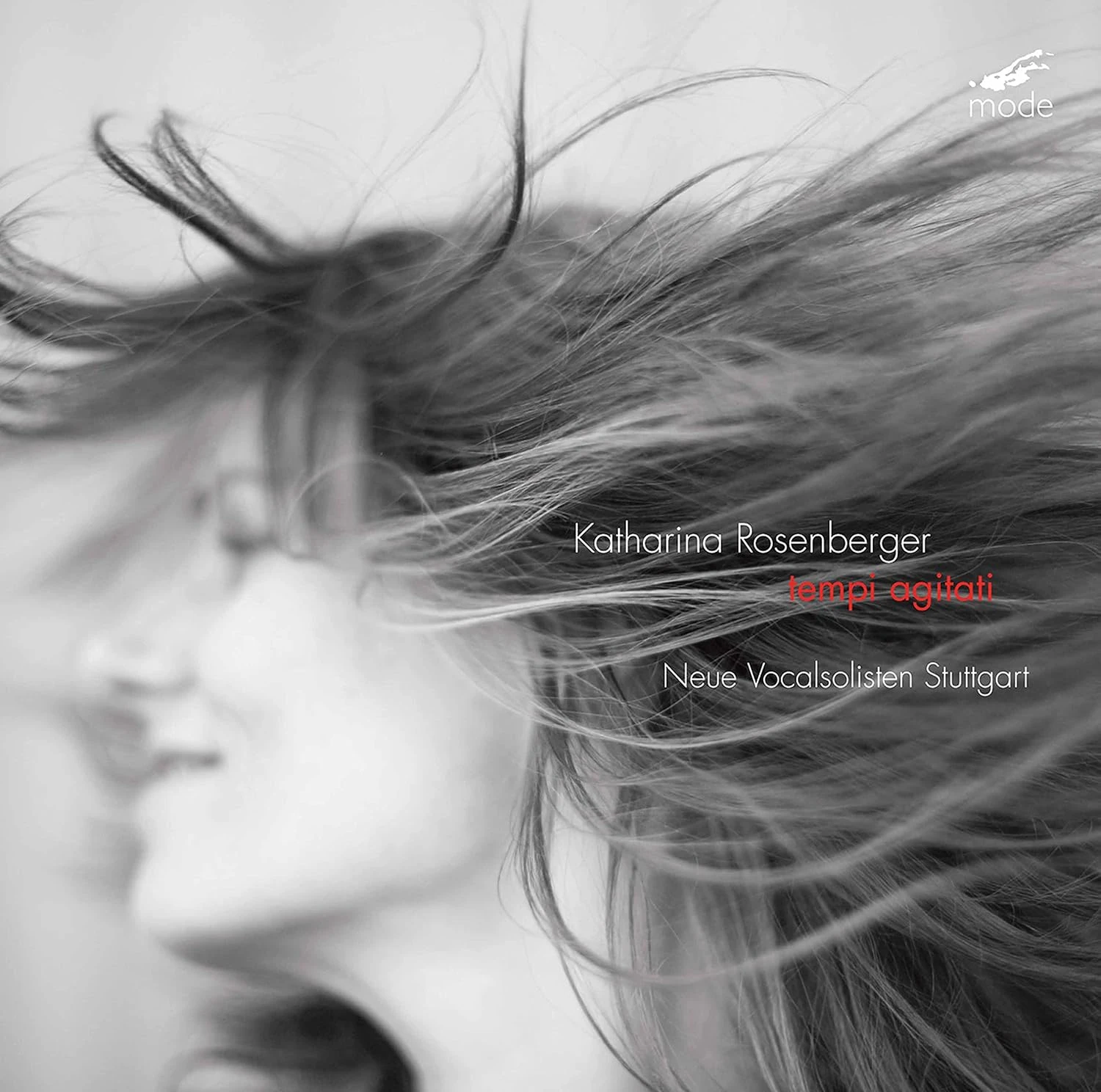
[CD] NEUE VOCALSOLISTEN STUTTGART - ROSENBERGER: TEMPI AGITATI
Leave feedback on the product

Product code: 0764593033424
Opis
- W naszym sklepie znajdziesz tylko nowe płyty
- Kupując płytę, sprawdź poniżej spodziewaną datę jej premiery
- Sprawdź również sugerowaną datę wysyłki
- Preordery wysyłamy w ciągu 10 -15 dni roboczych od dnia premiery, z zastrzeżeniem, że data premiery może się zmienić, co jest od nas niezależne
- Jeśli wybrałeś/-łaś odbiór osobisty, poczekaj na maila z informacją, że płyta jest gotowa do odbioru
- Ten tytuł jest importowany z USA; czas wysyłki w związku z tym może być wydłużony
Neue Vocalsolisten Stuttgart - TEMPI AGITATI
Format: CD
Label: MODE RECORDS [0764593033424]
RELEASE DATE: April 22, 2022
Opis:
On April 6, 1327, a 22-year-old Italian poet named Francesco Petrarca caught a glimpse of a young woman, Laura, in a church in Avignon. He later reported that "living sparks issued from two lovely eyes". Those sparks enflamed Petrarch such that he spent the rest of his illustrious career coming to terms with them. In the 16th century, madrigals were developed by Adrian Willaert and Cipriano de Rore, which took Petrarch's agonized images as justification for violating the rules that had guided musicians since before the beginnings of notated music. Those living sparks have leapt ahead seven more centuries to inspire Katharina Rosenberger. Her tempi agitati embeds Petrarch's texts (especially fragments from his "Ascent of Mount Ventoso") and settings of sonnets by Willaert and Rore within her own responses to those materials. In live performance, Rosenberger works together with stage-director Ludger Engels to distribute members of the ensemble, Neue Vocalsolisten, around the sound space; they dart around throughout the site, thereby embodying Petrarch's "vive faville." While a sound recording lacks the visual dimension crucial to Rosenberger's concept, it allows the listener to attend much more closely to her rich tapestry of sonorities as she puts Petrarch's 14th-century poetry and 16th-century madrigals into dialogue with her extended vocal techniques. Sometimes the singers coalesce into whole polyphonic samples before returning to the extended vocal techniques from which they had emerged. Sometimes, finally, the madrigal itself appears, now intact. Rosenberger thereby simulates Petrarch's struggle to put into coherent form his reactions to Laura's glance. Those living sparks have indeed inflamed thousands: Laura's glance goaded Petrarch to the heights of formal perfection in his sonnets, and it led the madrigalists to imagine tonal worlds far beyond the stylistic precepts they had inherited.
Opinie
If you've added a review and it doesn't appear on the list, it may be pending moderation.
Leave feedback on the product
